Welcome ! As a young French Marketing professional with a Master's in International Management I have been selecting since January 2007 the latest headlines and best researches on sustainable development, climate change, cleantech and the world energy sector. Sounds great ? Don't hesitate to subscribe now !

Bees are a critical element of global ecosystems and thus, to our survival. Didn’t Albert Einsteim himself stated that ” If the bee disappears from the surface of the earth, man would have no more than four years to live. “

Most unfortunately, those great insects are endangered by Colony Collapse Disorder (CCD). To a news article from Grist, the problem is nearing a tipping point. Indeed :

“(c)ommercial beekeepers have seen average population losses of about 30 percent each year since 2006 “ I guess it’s high time we tackle the issue.

Published on Wednesday, January 25 , 2012

I don’t talk about food often here. However, with so many starving people around the world, I should talk more about agricultural advances as feeding nine billion people by 2050 will be the biggest challenge ever faced.

To Ecogeek : ” A new type of rice (from) the University of Agricultural Sciences in Bangalore, India has many advantages over typical rice varieties. It requires less water to grow, it’s higher in protein and it emits less methane over its life cycle.

” This rice, which is not genetically modified but a hybrid crop, uses 60 percent less water than conventional rice crops. It only needs to be watered once a week even in arid climates.”

Published on Friday, November 25 , 2011

To Echo Sierra : ” According to the UN Population Fund, the global population will reach 7 billion souls on the 31st of October 2011, giving concerns about the natural resources scarcity and inequalities a renewed and actual acuity.”

” According to UN estimates, world population could grow to 15 billion by the end of the century, while global economy is based on limited  – and thus craved – resources. Conditions are met for an escalation of tensions and conflictuality.” 

I personally believe that it will prove difficult to reach even nine billion people as climate gets warmer and weirder. Olivier is absolutely right in saying that we will face an escalation of tensions… Continue »

Published on Monday, October 31 , 2011

Everybody loves chocolate but to TreeHugger : “ The world’s cocoa supply could be in danger from climate change, according to a new study from the CIAT, which says that prices are likely to skyrocket if preventative measures aren’t taken.”

” The report predicts that the expected temperature increase of more than two degrees by 2050 will leave many cocoa-producing areas in West Africa too hot to continue growing the crop. And the report says the decline could begin as soon as 2030.”

Of course the impact of climate change on chocolate harvests is trivial in comparison to what it could mean for all of us and our very civilization. But nonetheless, I consider this should motivate people to do more…

Published on Tuesday, October 4 , 2011

I have been a huge fan of Thomas L Friedman’s op-ed pieces in the New York Times for years. Here is another one that won’t change my mind about this brilliant journalist and author (See my review of his latest book)

I believe he is one of the best thinkers on our current economic, environmental and energy problems to date. Anyone who is willing to act on these issues should read him.

Indeed, Friedman believes America – and the world as a whole – should start as soon as possible a Green Revolution. I couldn’t agree more. Continue »

Published on Thursday, August 11 , 2011

One of my latest stride toward sustainability has been eating organic fruits. Indeed, after slashing my energy and water use and traveling as much as I could by train, I guess it was the natural next step.

So when Grist publishes an article on how organic food is ” not really better for you or the planet ” I am really wondering : Am I doing something bad ? Scientific American – which published the original article – brings us data.

This question is interesting, as organic food and beverages made $26.7 billion last year alone in the United States. Continue »

Published on Wednesday, July 20 , 2011

France and the whole European continent are currently at risk of a huge drought as little to no rain fell in April. This could have serious implications for harvests as Bloomberg notes :

European wheat and rapeseed crops are “in jeopardy” after an “incredibly dry” April, agricultural weather forecaster said. (…) Wheat and rapeseed in France, Germany and the U.K. are ready to deteriorate rapidly, without rain.”

One of my oldest and best friends is thinking – jokingly, as always – about rain dancing. Let’s hope we won’t have to resort to these kinds of things for water in the near future. Continue »

Published on Wednesday, May 4 , 2011

We saw that oil prices are now back above $100 a barrel. Most unfortunately, food prices are also increasing, and this is a problem for the poorest populations of the globe, and this includes Egypt, the world biggest wheat importer.

As the leading blog Climate Progress noted recently : ” Leading experts, reported in the media, have made the case that high food prices are one of the triggers of MidEast unrest.

Among the causes are the increased demand – Mankind will comprise seven billion people by year end – rising oil prices and climate change as it damages or decreases the harvests…

Published on Wednesday, February 9 , 2011

According to the Population Reference Bureau (PRB) the world population is due to hit seven billion by 2011. This occurs as it hit six billion only 12 years ago, and five billion 24 years ago.

The current increase of global population poses multiple serious problems.With decreasing water supplies as the Himalaya’s snow is melting and as climate is changing in Africa how could we feed so many more people ?

It seems the population increase is slowing down in Asia but keeps on staying high in Sub-Saharan Africa and other countries. This is exemplified very easily by the map below. Continue »

Published on Tuesday, January 11 , 2011

As the New York Times notes aquaculture might be a good solution to avoid the depletion of fish stocks and thus be a sustainable way to feed the billion of people that will be born this century.

However fish farming poses several problems such as diseases, water pollution, heavy antibiotics use and also may harm wild fish populations when it is done to preserve them.

Environmentalists thus believe drastic improvements have to occur if it wants to become the alternative to wild-caught fish. They may soon come from a company from Singapore.

Published on Thursday, October 28 , 2010
 Page 1 of 2  1  2 »

Meanwhile on Twitter

Error: Twitter did not respond. Please wait a few minutes and refresh this page.

Let s socialize

Some random wisdom

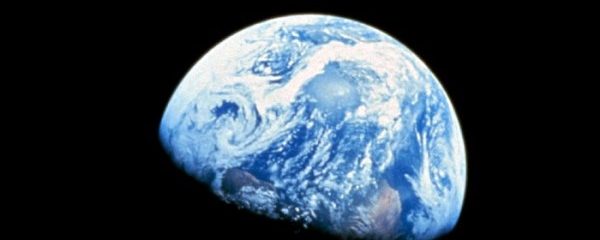
You develop an instant global consciousness, a people orientation, an intense dissatisfaction with the state of the world, and a compulsion to do something about it. From out there on the moon, international politics look so petty. You want to grab a politician by the scruff of the neck and drag him a quarter of a million miles out and say, ‘Look at that, you son of a bitch. — Apollo 14 astronaut Edgar Mitchell